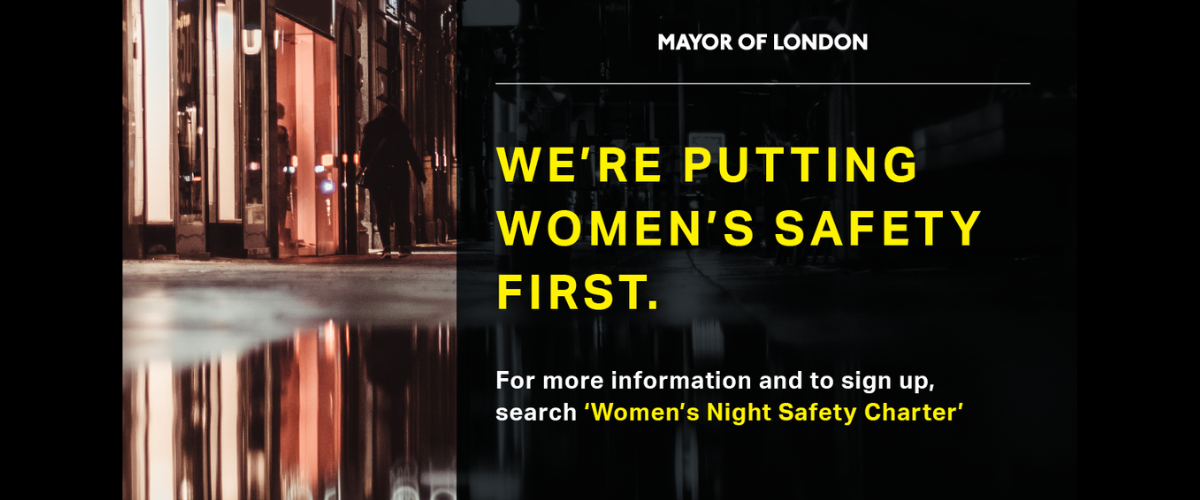
In a sector built on creativity, expression, and connection, safety should never be an afterthought. Yet for many women and marginalised groups working across the music industry—whether on stage, behind the scenes, or in the audience—feeling safe is still not guaranteed. That’s where the Women’s Night Safety Charter for London comes in.
The Charter is a practical, city-wide initiative designed to support organisations in taking meaningful action to improve safety for women and girls across a 24-hour city. While its name references the night-time economy, its relevance spans far beyond late-night venues. For the music industry, it speaks directly to the full ecosystem—studios, rehearsal spaces, live venues, festivals, transport, and the freelance networks that keep everything moving.
For members of The F-List for Music community, the Charter aligns closely with ongoing work to address inequality and create more inclusive environments. Many of the barriers women face in music are not just about access or representation—they are about safety, confidence, and the ability to participate fully without fear of harassment or harm.
At its core, the Charter encourages organisations to take clear, actionable steps. This includes training staff to recognise and respond to harassment, establishing visible and accessible reporting mechanisms, and fostering a culture where inappropriate behaviour is challenged, not ignored. For venues and event organisers, this might mean reviewing security practices, improving lighting and signage, or ensuring that staff and artists know what to do if someone feels unsafe. For industry professionals, it’s about embedding these principles into everyday practice—whether managing artists, running events, or shaping workplace culture.
Importantly, the Charter is not about a one-size-fits-all solution. It’s a framework that can be adapted to different parts of the industry, from grassroots venues to major festivals. What matters is the commitment to continuous improvement and accountability. Signing up is not the end point—it’s the starting point for ongoing action.
There is also a wider cultural shift at play. Movements across the creative industries have highlighted the extent to which unsafe environments have been normalised for too long. The music industry, with its late hours, informal working structures, and blurred boundaries between social and professional spaces, can be particularly challenging to navigate. By adopting the Charter, organisations send a clear message: safety is not optional, and it is everyone’s responsibility.
For The F-List community, there is a real opportunity to lead by example. With its network of experienced professionals and commitment to supporting women and gender minorities in music, The F-List is well placed to champion safer practices and encourage others to do the same. This is not just about compliance—it’s about shaping a better industry for the future.
Alongside organisations, individual artists can also get involved. Signing up as an individual is an opportunity to better understand the work of the Charter, access resources, and become part of a growing movement advocating for safer spaces across the industry. Artists interested in taking up this opportunity or learning more are encouraged to contact Sarah Walker directly at sarah.walker@saferbusiness.org.uk.
Safer environments enable creativity to thrive. When people feel secure, respected, and supported, they are more able to take risks, collaborate, and contribute their best work. That benefits not only individuals, but the industry as a whole.