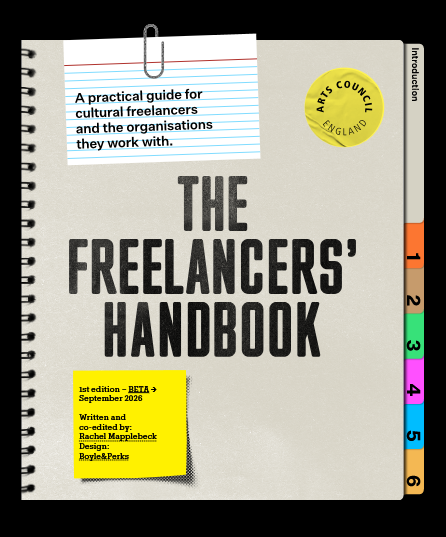




The Freelancers’ Handbook (Arts Council England)
Arts Council England has published its first Freelancers’ Handbook: a free, practical guide for cultural freelancers and the organisations that work with them. It was written by freelancer Rachel Mapplebeck, with contributions from other freelancers, and draws on the experiences of more than 5,000 people who took part in the 2024 Cultural Freelancers Study.
Most musicians are freelance, and this Handbook covers the business side of a music career that is rarely taught. It is especially useful on:
There is also a section for organisations, with a checklist and a fair work pledge: pay freelancers fairly and on time, contract well, credit their work and support their access needs. If you hire musicians, read it.
What do we mean by self-employment? Sometimes it is also called being freelance. HMRC, the government body responsible for tax in the UK explains someone is probably self-employed and most of the following are true:
There is further information here: https://www.gov.uk/employment-status/selfemployed-contractor
Self-employment as a musician necessitates a diligent approach to various business tasks. Establishing yourself as a professional entity not only instills confidence in clients and collaborators but also ensures compliance with legal and financial regulations. There should be three areas you need to be on top of once you have registered as self-employed with HMRC,
By registering with HMRC, you formalise your status as a self-employed individual, enabling you to manage taxes and contributions efficiently. Diligent bookkeeping practices are crucial, enabling you to track income, expenses, and financial transactions accurately. Effective management systems can help streamline your workflow, safeguard sensitive information, and enhance organisational efficiency. Adopting a proactive and organised stance towards self-employment cultivates professionalism, instills trust, and lays the foundation for a sustainable and successful career in music.
When you are self-employed you will be required to issue (or send) invoices, that is a request for payment to your clients. Bookkeeping packages will usually issue invoices for you or you can create one in a program such as Word or as a pdf. If you have not done this before we have created a template invoice which you can duplicate for your business, simply click on the blue button just to the right here to downlad.