Reflective approaches = how you think about and analyse your practice
Reflective approaches in music research recognise that knowledge emerges through practice as much as through analysis. In reflective approaches, such as in music, arts, and qualitative research, you treat your own practice (for example, songwriting, performance, production, or facilitation) as a site of inquiry. This involves asking how and why particular choices were made, how power, identity, emotion, and context shape those choices, and what this reveals about wider social, cultural, or professional structures. Reflection is not simply description or introspection; it is analytical and iterative. It typically combines lived experience with theory, documentation (such as journals, lyrics, recordings, or fieldnotes), and critical distance, allowing personal practice to contribute rigorously to research knowledge.
Core focus:
Reflexivity, positionality, critical self-examination
How knowledge is shaped by identity, experience, power, and context
Key question it answers:
How does my position, experience, and decision-making shape the knowledge being produced?
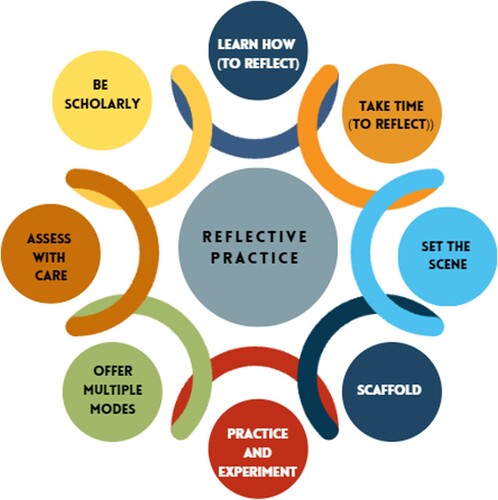
Typical methods/tools:
Reflective journals or logs
Annotated practice (notes on rehearsals, sessions, drafts)
Critical reflection linked to theory
Autoethnographic writing
Recommended reading: The Creative Reflective Practitioner examines what it means to work as a reflective creative practitioner across a wide range of disciplines, including music, film, dance, drama, and interactive digital art. The book foregrounds the lived experiences of practitioners who are deeply committed to creative work, exploring how reflection operates within solo practice, collaboration, research contexts, and technologically mediated environments.
Drawing on practitioner interviews, case studies, historical accounts, and research literature, it offers insight into how reflection is stimulated and sustained through different creative situations. The book builds on and extends Donald Schön’s concepts of reflection-in-action and reflection-on-action, introducing contemporary perspectives that account for the role of digital tools as medium, mediator, and creative partner. Reflection is positioned not as an add-on, but as integral to creative thinking, learning, and innovation. The text is relevant to researchers, students, and arts professionals seeking to understand how reflective practice generates knowledge from within creative work itself.


Recommended reading: The Feminist Standpoint Theory Reader Edited by Sandra Harding A foundational collection arguing that knowledge is socially situated, legitimising reflexivity and lived experience as analytical insight, especially from marginalised positions challenging power and inequality structures.

Feminist standpoint theory within reflective approaches
Reflective approaches are often informed by feminist standpoint theory, which argues that knowledge is socially situated and that people positioned at the margins of power can offer distinctive and valuable insights into how systems operate. Rather than claiming objectivity or neutrality, standpoint theory emphasises reflexivity, lived experience, and the critical examination of power, identity, and inequality.
Within reflective research, this means treating the researcher’s positionality—such as gender, race, class, sexuality, disability, or caring responsibilities—not as bias to be eliminated, but as a legitimate source of insight. Reflection becomes a structured way of interrogating how these lived positions shape creative choices, access to opportunities, and professional experiences within music and cultural work.
From a feminist standpoint perspective, reflective practice is therefore not simply personal reflection. It is a political and analytical act that connects individual experience to wider structural conditions, including inequality regimes, labour practices, and cultural norms within the music industry.